
What Google announced
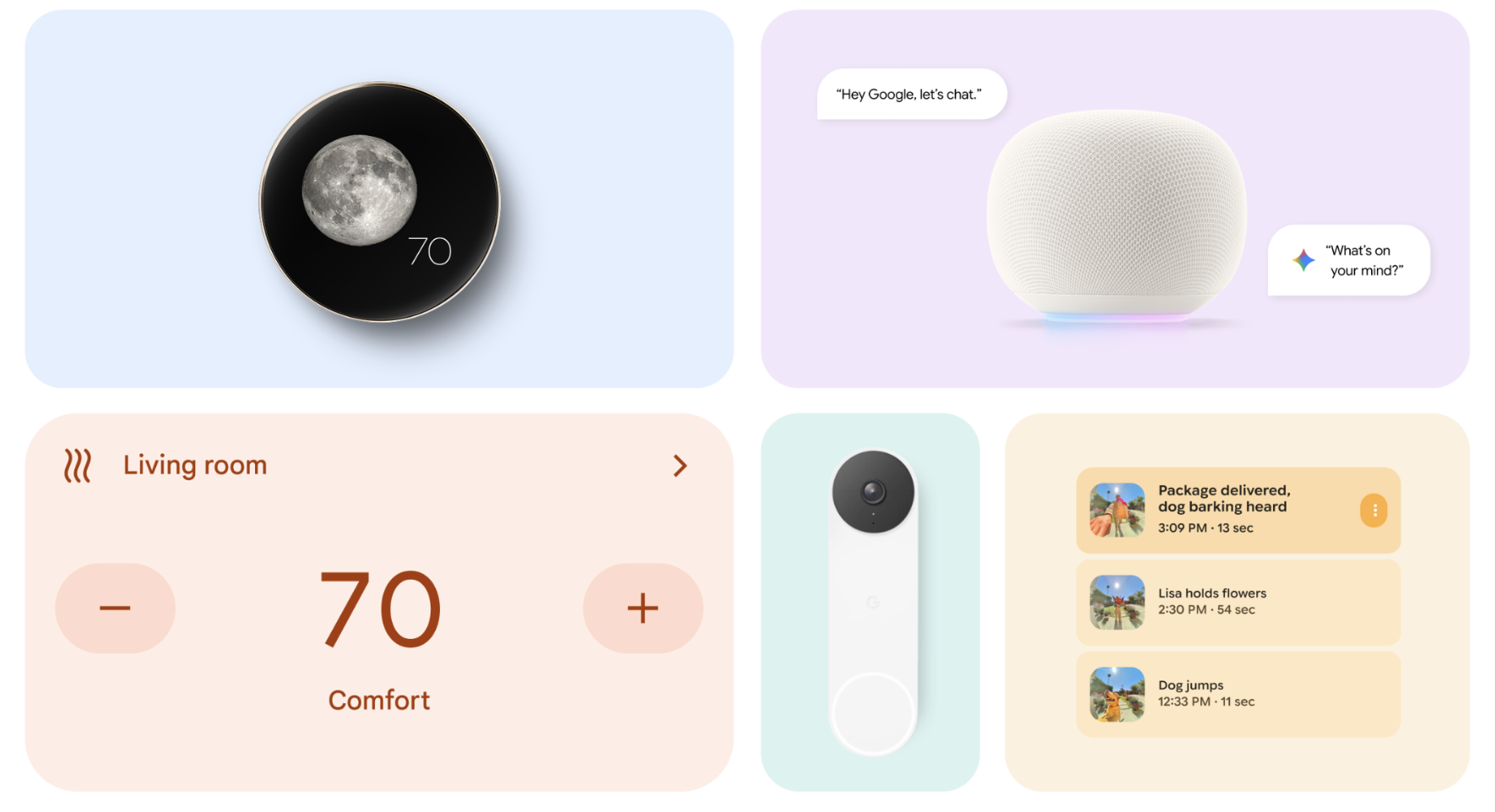
Google's fall 2026 Google Home update, posted on November 17, includes a change that Nest owners have asked about for years. From December, the Nest Learning Thermostat (4th gen) will work with third-party room sensors. In Google's words, you "will no longer be limited to first-party sensors to manage hot and cold spots around the house," and can pair "compatible Matter temperature sensors from brands like IKEA, Eve, and Aqara" directly with the thermostat.
Once a Matter sensor is paired, Google says you can:
- see live room readings in the Google Home app
- average temperatures across several rooms
- schedule which sensor the thermostat follows at different times of day, for example the bedroom at night
- use the sensor's readings to trigger Google Home automations
Google lists the feature as "coming soon" and limited to the 4th-gen Learning Thermostat and the Google Home app. The same post says the thermostat updates in this batch are rolling out in the US and Canada. Google has not given an exact December date.
Why this matters
Until now, the only room sensor a Nest thermostat could use was Google's Nest Temperature Sensor, which talks to the thermostat over Bluetooth. One comes in the box with the 4th-gen Learning Thermostat. Every extra room meant buying another Google sensor.
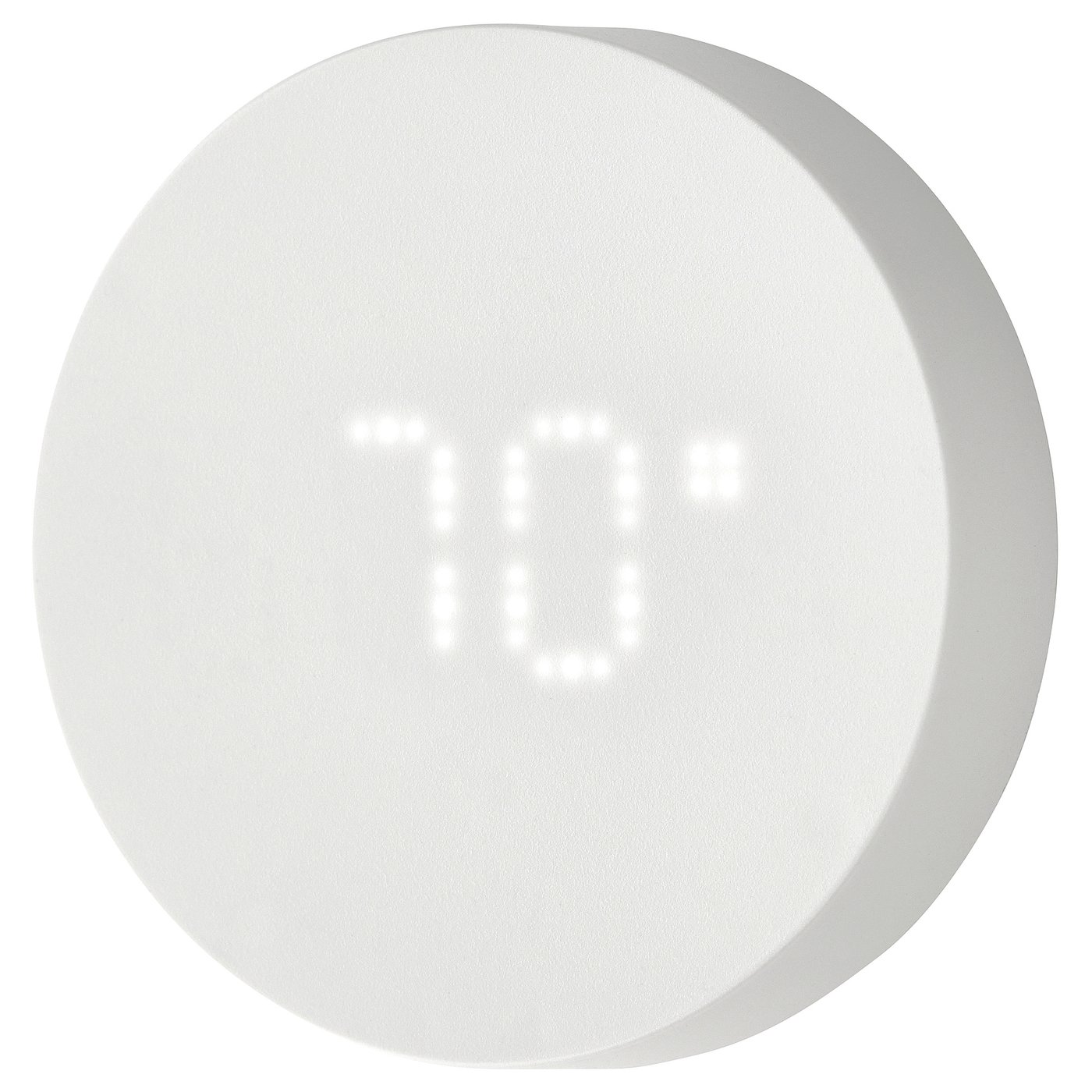
Matter changes the math. IKEA's TIMMERFLOTTE temperature and humidity sensor has a US list price of $11.99 at IKEA, before two AAA batteries. Aqara's Climate Sensor W100 adds a 3.4-inch display and three programmable buttons. Many homes that already run Apple Home, Home Assistant or SmartThings have a few of these sensors scattered around. Matter's multi-admin feature lets the same sensor be shared with Google Home, so a sensor you bought for another platform could also steer your Nest.
It is also a sign of where Google is taking Nest. The 4th-gen thermostat already works with Apple Home and other Matter platforms as a Matter device. Accepting Matter sensors is the other half: Nest now consumes data from other brands instead of only exposing itself to them.
The sensors Google named
Google named brands, not models, so the cards below show what is in our catalog from those brands, plus one other Matter-over-Thread sensor for comparison. IKEA's TIMMERFLOTTE is not sold on Amazon, so it has no card here.

- Role
- Thermostat
- Matter
- Over Wi-Fi
- Room sensor in box
- Nest Temperature Sensor (2nd gen)

- Role
- Indoor climate sensor
- Matter
- Over Thread
- Extras
- 3.4-inch display, three buttons

- Role
- Outdoor weather sensor
- Matter
- Over Thread
- Extras
- Display, weather trend

- Role
- Indoor climate sensor
- Matter
- Over Thread
- Extras
- Air pressure reading
| Sensor | Connection | Placement | Named by Google |
|---|---|---|---|
| Nest Temperature Sensor (2nd gen) | Bluetooth to the thermostat | Indoor | Google's own sensor |
| IKEA TIMMERFLOTTE | Matter over Thread | Indoor, with a press-to-show display | Brand named (IKEA) |
| Aqara Climate Sensor W100 | Matter over Thread, or Zigbee with an Aqara hub | Indoor, with a display and buttons | Brand named (Aqara) |
| Eve Weather | Matter over Thread | Outdoor, splash resistant | Brand named (Eve) |
| arre temperature and humidity sensor | Matter over Thread | Indoor | Not named |
A word on Eve: Google did not say which Eve product it means. Eve Weather is built for a balcony or porch, and an outdoor reading is not what you want steering your heating. If you want an Eve sensor for this, wait for Google's compatibility list in December.

Thread vs Wi-Fi: the catch with cheap sensors
Almost every low-cost Matter temperature sensor runs on Thread, because Thread lets a pair of AAA batteries last a year or more. That brings in a requirement Google's announcement does not address.
Google's Matter help page says Thread devices in Google Home need a hub that also works as a Thread border router. Its current list is the Google Home Speaker (2026), Nest Hub (2nd gen), Nest Hub Max, Nest Wifi Pro and Google TV Streamer (4K). The Nest Learning Thermostat is not on that list, and the Google Store spec sheet for the 4th gen lists Wi-Fi as its only connectivity.
Google does say the sensors pair "directly" with the thermostat, so there may be more to it. For now, the safe assumption is:
- If you already own one of those Google hubs, a Thread sensor should join your Google Home Thread network like any other Matter device.
- If you don't, budget for a hub or wait for Google's December setup instructions before buying a stack of sensors.
- If your Thread sensors already live on another platform, such as Apple Home with a HomePod mini, you can usually share them to Google Home with a pairing code. Google Home still needs its own route to the Thread network, so the same hub question applies.
Our Thread vs Wi-Fi deep dive explains why sensors moved to Thread, and the hubs and border routers guide compares the hardware that runs a Thread network.
How it works across platforms
| Feature | Apple Home | Google Home | Alexa | SmartThings | Home Assistant |
|---|---|---|---|---|---|
| Nest Learning Thermostat (4th gen) over Matter | |||||
| Basic thermostat control | Supported | Supported | Supported | Supported | Supported |
| Nest's own room sensor scheduling and averaging | Not supported | Supported | Not supported | Not supported | Not supported |
| Matter temperature sensors | |||||
| Show room readings | Supported | Supported | Supported | Supported | Supported |
| Use as the Nest's room sensor (from December) | Not supported | Supported | Not supported | Not supported | Not supported |
| Adjust the thermostat from a sensor through automations | Partial | Supported | Partial | Partial | Partial |
Which Nest thermostats get it
Only the Nest Learning Thermostat (4th gen), the 2024 model with the larger domed display. Google's footnote says the feature requires that thermostat and the Google Home app. The 3rd-gen Learning Thermostat and the Thermostat E keep working with Google's own Nest Temperature Sensor. The cheaper Nest Thermostat does not support room sensors at all.
The update is free. Google says it starts rolling out in December in the US and Canada, and you will find it through the Google Home app.
Pricing and availability
Google's own store lists the 4th-gen Learning Thermostat at $279.99 with one Nest Temperature Sensor in the box. Current prices for the thermostat and the Matter sensors above are below. IKEA sells TIMMERFLOTTE through its own stores and website.
| Product | Matter | Connectivity | Price | Buy |
|---|---|---|---|---|
| Nest Learning Thermostat (4th Gen) | Matter 1.5.1 | Wi-Fi / Bluetooth | $228.00 | Check price |
| Aqara Climate Sensor W100 | Matter 1.3 | Thread / Zigbee / Bluetooth | $39.99 | Check price |
| Eve Weather Station (Thread) | Matter 1.3 | Thread / Bluetooth | $75.99 | Check price |
| arre Matter Temp & Humidity Sensor | Matter | Thread / Bluetooth | $39.99 | Check price |
For other thermostat options that work across platforms, see our Matter thermostats guide.
Who should buy what
-
Own a 4th-gen Nest and a Google Thread hubWait for December, then add cheap sensors: TIMMERFLOTTE or W100 per room.
-
Own a 4th-gen Nest, no Thread hubHold off: see whether Google needs a hub before buying sensors.
-
Want buttons and a displayAqara W100: a room sensor that doubles as a scene remote.
-
Own a 3rd-gen Nest or Thermostat EStick with Nest sensors: Matter sensors aren't coming to your model.
-
Shopping for a new thermostatNest 4th gen: now the most flexible Nest for room sensors.
This is a small feature on paper, but it is one of the clearest examples yet of Matter paying off for ordinary buyers. A $12 sensor bought for one platform could soon steer a thermostat made by a different company. The open questions are about Thread and the compatibility list, and Google should answer both when the update ships in December.
As an Amazon Associate, we earn from qualifying purchases. Product links on this page are affiliate links; they do not change the price you pay. Prices may change after publication.